Friday, January 31, 2020

What happened in Koo Wee Rup in 1920

This is a look back 100 years at what happened in Koo Wee Rup and surrounds in 1920.

Mickle Memories of Koo Wee Rup by David Mickle, is a chronological look at the history of Koo Wee Rup. David starts the 1920 entry with the following about hay stacks. David’s brother, Fred’s diary entry for January 1 recorded that our big hay shed was filled with close to 100 tons. We had to hire a stack builder as we couldn’t manage to build stacks. The leading stack builder, Jack Kelly, was a real hard case, made us drop the sheaves right where he wanted them. Good stacking is a sort of expanding circular procedure lapping the sheaves as you go. In five days we had two stacks with about fifty-five tons up. When Jack received his cheque on Friday or Saturday he rarely had much left Monday morning. He earned £1 a day, well above the rate for other hands. David also wrote that Fred says we killed twenty snakes during harvest.

David wrote that there was a navvies camp in Koo Wee Rup -  a navvie was a labourer employed to construct roads and railways -  and they were working on the new line that went from Koo Wee Rup to Strzelecki. Fred found 160 beer bottles near the camp. The going rate for the bottles was 6 pence a dozen, which amounted to eight shillings, which was good money as at the time they were getting only 2 shillings and six pence per day picking spuds.

In February, the Koo Wee Rup Sun had this report, with the headline Phone Facilities. It is a surprising oversight on the part of some business people of Koo Wee Rup and Cranbourne who still muddle on without installing a telephone, thus placing themselves and customers at great disadvantage and inconvenience….[they should]  keep abreast of the times and not live as in the days of ancient runners that the telephone service has pushed out of work. (Koo Wee Rup Sun February 19, 1920)


Feat of flying
The Herald March 19, 1920  http://nla.gov.au/nla.news-article242172019

In March, this interesting feat was reported Flight to land sale - a crowded three hours - Flying from Melbourne to Koo-wee-rup, a distance of nearly 50 miles, in 25 minutes, completing a land sale, attending races at Koo-wee-rup, and returning to Melbourne, in a little more than three hours, was the achievement yesterday afternoon of Mr A. F. Witham and Mr B. Kavanagh, of Messrs Witham, Woodman and Kavanagh, land salesmen. (The Herald March 19, 1920) David Mickle also wrote about this in his book - the flight took place on St Patrick’s Day, they flew at 96 miles per hour and landed in what was then a paddock opposite the Secondary College. The pilot, Captain King gave a demonstration for the excited crowd.


John Mickle's Lauriston Park subdivision sale advertisement
Koo Wee Rup Sun, April 1 1920

In the April, David’s uncle, John Mickle subdivided some of his Lauriston Park property. The subdivision started from the Rossiter Road/Station Street intersection, down towards what is now the Secondary College. In 1926 further subdivision took place with the creation of John, Alexander and Mickle Streets.

Also in April the Koo Wee Rup Sun raised this issue - It would be interesting to find out how much money is thrown away by the various Government Departments in the getting of reports.  In Koo Wee Rup we have had a large number of reports in connection with railway matters, while last week officials of the Police department went over the same old routine of several months ago in connection with the establishment of a permanent police station here. This repetition of reports…..is a testimony to money and labour being wasted. So, no change here 100 years later. (Koo Wee Rup Sun April 22, 1920)

1920 saw the opening of two local State Schools - Dalmore School was on August 6. The first teacher was Emilie Pitt. According to a report in the South Bourke & Mornington Journal, the school was on a splendid site, had a nice appearance inside and out and had excellent lighting and ventilation.   The other school was at Monomeith, which first occupied a room in a house. The actual school building was occupied in July 1924. It was a very short-lived school as it closed in May 1933. The Monomeith building was relocated to Tooradin North in 1935, where it was used until 1970. In 2005 it was relocated again, to the Fisherman's Cottage Museum Complex, on the Foreshore at Tooradin.


Photo of the train wreckage at Koo Wee Rup
Weekly Times August 21, 1920  http://nla.gov.au/nla.news-article222557562

On August 18, a tragic accident happened at the Rossiter Road railway crossing when a car collided with the express train from Nyora. Two State Rivers & Water Supply Commission men were killed, William Thomson and Allan Deal. The Coroner in his report had a verdict of misadventure. The evidence of the men from the Railways said it was a good level crossing, but evidence presented by the motor car driver, Jack Dalley, and the owner of the car, Andrew Colvin and others said it was a dangerous crossing.

Also in August the Koo Wee Rup Sun reported on the visit of another aeroplane to Koo Wee Rup, this was in conjunction with 2nd Peace Loan. The plane toured the country and people subscribed to the loan (i.e. lent the Government money and they received interest). The money was for the repatriation of the soldiers. The plane landed behind the Royal Hotel on Monday August 23 and appeals were made and in the four hours the plane was in the town the people of Koo Wee Rup signed up for £4,900. The plane had been at Lang Lang on the same day and it raised £1,850. As David Mickle wrote, aeroplanes were No.1 drawcards in those days.

This is a bit out of Koo Wee Rup, but in August 1920 James Lecky of Cardinia Park in Officer South sold their property. Cardinia Park, previously called Gin Gin Bean, had been in the Lecky family since 1846. Perhaps the decision to sell was prompted by the fact that James lost two sons in the First World War - James (the younger) died of wounds on November 14, 1918 and William was killed in action on September 1, 1918.
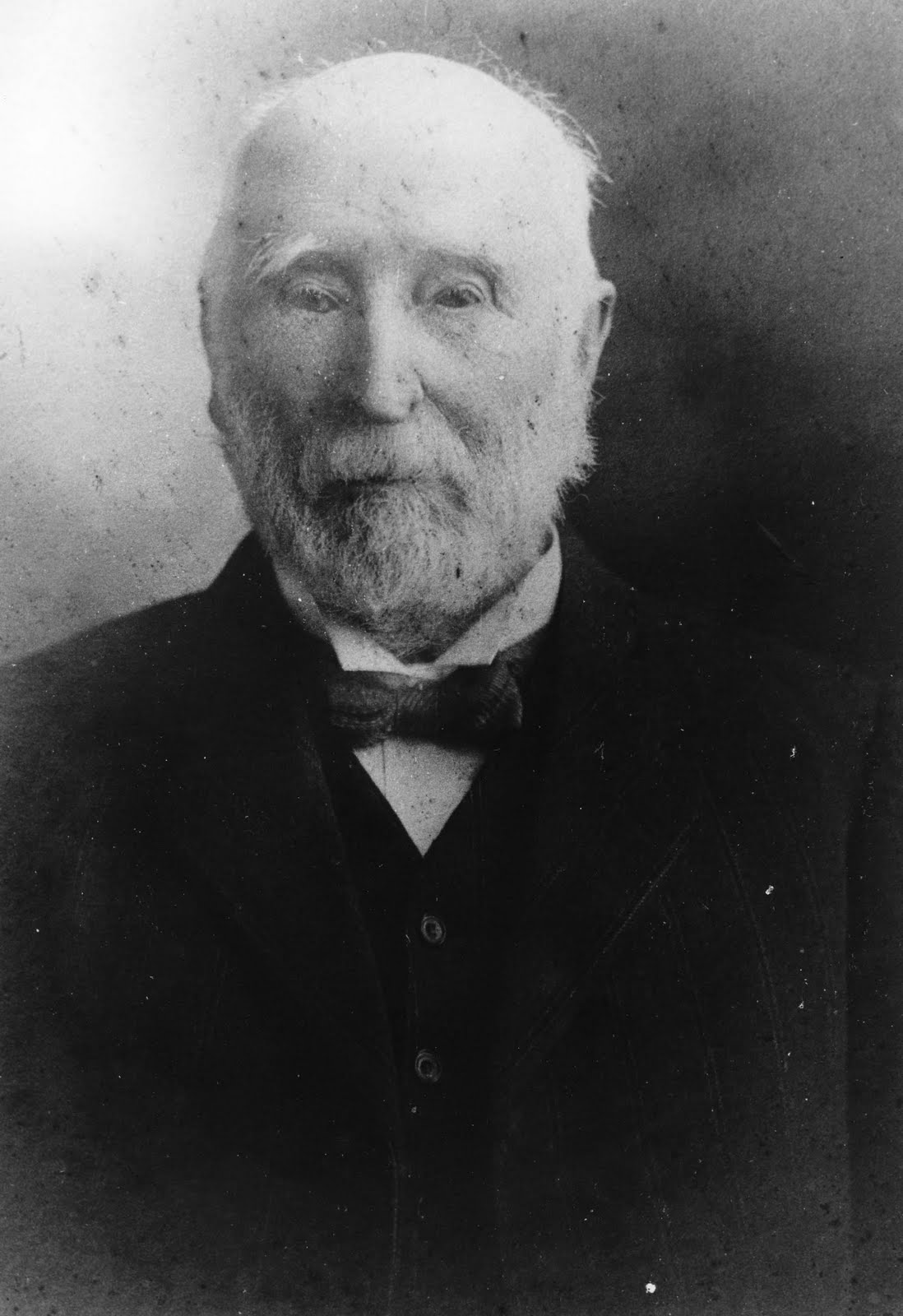

Christoper Moody (1833 - 1920)
Koo Wee Rup Swamp Historical Society photograph

We will finish this post with another pioneer, Christopher Moody, who passed away November 17, 1920. Moody purchased 1,686 acres of the Great Swamp run in 1875. He sub-divided land in the 1890s in the Koo Wee Rup township - what became Moody, Gardner, Henry and Salmon Streets. In 1902 he moved to Shepton in Rossiter Road.  He is also the source of the name of Moody’s Inlet. You can read more about Christopher Moody, here.

Saturday, January 18, 2020

Grandma's garden at Cora Lynn

I am rather fond of palm trees and there used to be a palm tree in the garden at Grandma's house on Murray Road, Cora Lynn. The property was called Evesham. Grandma was Eva Rouse (nee Weatherhead). Her garden was magnificent and the palm tree was out the back, near the water tank and next to a weeping cherry tree and near the holly bush. Growing next to the water tank was a tree dahlia, which as you would know, has a very short flowering season. Behind the palm was the vegetable garden and an orchard.  If we went around the house to the west side, Grandma had lots of dahlias; round the house to the front or the north and the the east side - were trees, blossom trees, magnolias, a feijoa, a camellias, various roses - bush and climbing; lilacs, a wisteria, bird of paradise, and then around the back on the back path to the back door there was a Cecile Brunner pink rose, fuscias, violets, hellebores, Chinese lantern trees, snowball trees, a mulberry tree. Plus various flowers everywhere - stocks, snap dragons etc.  The garden was her pride and joy.


My Dad (Frank Rouse), my aunty  Marion, and Grandma - off to church on a Sunday, around 1955 - and there's our palm tree in the back, behind the water tank.


Grandma in front of the tree dahlia, 1966 - and there's our palm tree on the right,  next to the elevated tank.


No palm tree in this photo - but this is Evesham and Grandma with two children and holding a baby, most likely my dad, who was born December 1934.


Evesham, 1958. No palm trees in any of the following photos, but here are some other photos of Grandma's garden. The fence was constructed by my Dad and my uncle, Jim Rouse. The top pipe was  a water pipe, which could have  a hose attached to the end and it had taps at various intervals to connect hoses.


Evesham, 1958


Evesham, 1958. This is the driveway, the little building on the right is the chook feed shed. The bricks on the left are for a 3 bay open-fronted shed that was being constructed.


Evesham, 1964

Matthew Bennett, farmer and M.L.A

Matthew Bennett was born January 20, 1862 at Carngham, near Ballarat, to Joseph and Elizabeth Ann (nee Temby) Bennett. The family later moved to Benjeroop where they farmed. As well as Matthew there were three other sons - Edward (died 1919 at Nathalia, aged 63); Richard (died 1900 at Kerang, aged 41) and Thomas (died 1914 at Kerang, aged 41) and a daughter, Emma (Mrs Chester Eagle, died 1943 at Barham). When Joseph died on March 24, 1906 he and Elizabeth were living at Kerang. Elizabeth died May 1, 1924 at Barham in New South Wales.

Matthew had a farm in his own right at Benjeroop and on October 31, 1889 he married Mary Simpson at the Baptist church at Benjeroop. This church had been moved in June from its original location to a more central location in the town protected on the north and west by the high timber growing along the river, and [where] there is also a nice little grove of young trees close by, which will be a very convenient shelter for horses and vehicles, both in hot and cold weather (Kerang Times May 8, 1888).  Mary was the daughter of Charles and Emma (nee Bond) Simpson. They were also farmers from Benjeroop. Matthew and Mary had four daughters whilst they were living in the Benjeroop / Murrabit region.

Around 1893, Matthew was elected as a Trustee of the Benjeroop and Murrabit Water Trust. In 1905 the family moved 400 kilometres south to Yannathan, on the recently drained Koo Wee Rup Swamp. A ‘send-off’ was held for the family on March 21 and attended by 150 locals. The Kerang New Times reported on the occasion – the room being decorated with evergreens, pampas grass, palm leaves, etc, and with the tables attractively laid out and laden with enticing comestibles from the substantial ham and turkey to the lighter trifle and jellies.  Many complimentary speeches were made about Matthew, as you would imagine – He was a gentleman who was appreciated by all and had carried out whatever public duties he had performed honestly and fairly.  He had original ideas of his own and endeavoured to give them effect and was not afraid to have the courage of his opinion….He was an up to date farmer, ready to adopt any new method which would improve the farming interests and had shown what could be done in the district by irrigation.

After the speeches Matthew was presented with a handsome gold Albert and locket and Mary was presented with a silver hot water kettle with spirit lamp attachment. A ‘gold Albert’ I have just found out is a watch chain. The evening finished with the National Anthem, followed by a dance which was kept up to an early hour.  (Kerang New Times March 24, 1905, see here)

The family moved to Crown Allotments 28 and 29, Parish of Koo Wee Rup East. The allotments  were 159 acres and 154 acres respectively - 313 acres in all. They were near Bayles on the north side of the Bayles-Modella road. When the Bennetts moved to the area it was called Yannathan, but the area was later known as Catani.  Both Bayles and Catani came into existence as they were stations on the Koo Wee Rup to Strzelecki Railway line which opened in June 1922 and the towns soon developed around the stations. Catani, was, of course, named for Carlo Catani, the Public Works Department engineer who worked on the Koo Wee Rup Swamp drainage scheme.  Initially Matthew was a dairy farmer, but he gave up dairying in September 1915, held a clearing sale and became a grazier.


Matthew Bennett's clearing sale.
Lang Lang Guardian September 29, 1915 http://nla.gov.au/nla.news-article119512940


The family took part in the life of the community, whilst they were at Yannathan.  Matthew was the president of the Yannathan New Year’s Day Sports Carnival; Mary was the vice-president of the Yannathan branch of the Lady Mayoress' Patriotic League and the whole family were involved with fund raising for ‘patriotic causes’ during the Great War. We will have a quick look at the lives of four Bennett daughters. The eldest daughter, Janey Gertrude was born in 1892. In 1917, she married Joseph Henry Carson, whose parents owned a property at Yannathan. Joseph had a property at Balldoran, north of Dubbo; Janey spent her married life in that region and died in 1984. The second daughter, Elsie Marjorie Elizabeth, was born in 1894. She married Abraham Alfred Patullo, of Lang Lang, in 1920 and they farmed some of the land that was owned by her parents. She died in 1980. The third daughter, Isabel Emma, was born in 1896, she never married and died in 1983. The fourth daughter, Josephine Eleanor was born in 1899 and married Jack Reeve Dowling, an Accountant from Melbourne, in 1936. She died in 1989.

Matthew Bennett was involved with the Victorian Farmers’ Union which became the Country Party in the late 1920s – he was on the Central Council at both State and Federal level and President of the local Yannathan branch, so it was no surprise that he would stand for election. On August 27, 1925 he was elected as a councillor to the Cranbourne Shire. His platform, as published in a letter in the Koo Wee Rup Sun of August 20, was primarily concerned with roads good roads are very essential in this Riding in particular, as it is one of intensive culture almost throughout. They facilitate production, which means wealth, cheapens transport, help to stop the drift to the city, brightens country life and very materially help primary producers and country townspeople to prosper. Mr Bennett was Shire President on two occasions and remained on the Council until his death, in 1951. He was the Shire President 1931/1932 and 1941/1942.    In 1953, his grandson Stewart Patullo was elected as  a Cranbourne Shire Councillor.


Matthew Bennett
Dandenong Journal September 17, 1931 http://nla.gov.au/nla.news-article201085220

On October 1, 1929 at a by-election, Mr Bennett was elected to the Legislative Assembly for the seat of West Gippsland, representing the Country Party.  He retired from Parliament after nearly 21 years on April 1, 1950. Apart from the fact that he was then well into his eighties, his health had been affected by illness and a serious car accident in January 1949. Matthew Bennett was a farmer and had country interests at heart and one of his achievements was the establishment of the Milk Board in December 1933, which regulated the dairy industry.

Matthew’s wife, Mary died on August 2, 1925. The death notice said that she died at her residence 16 Service Street, Hampton. She is buried at the Brighton Cemetery. It was just after her death that Matthew decided to stand for Council - I wonder if those two events were linked?  Of interest though is the fact that in 1925, Mary Bennett was not living at Catani or Yannathan. Even though Matthew Bennett maintained property in the area, he also did not live in the country. From 1926 his residential address in the Shire of Cranbourne Rate books was 631 Inkerman Road in Caulfield, so maybe the roads still weren’t good enough for them and country life was not ‘bright’ enough for them and they ‘drifted’ to the city.

However, he was still popular as he kept getting re-elected and there are various reports of ‘complimentary socials’ being held in various local towns.  In fact, in August 1944 at a function at the Catani Hall, Mr Bennett was presented with an illuminated address, and he was congratulated on having won such universal esteem and on having attended to his parliamentary duties in the interests of all, irrespective, of party. (Dandenong Journal August 2, 1944).

Matthew Bennett died on January 16, 1951 and he was buried with his wife Mary at Brighton Cemetery. His obituary in the Dandenong Journal of January 17, 1951 said he was affectionately known as “Mattie” throughout the length and breadth of Gippsland, was a wonderful character, who made friends everywhere, but never an enemy. Matthew Bennett Park in Drouin is named after him as is Bennett Road in Catani.

I have created  a list on Trove on newspaper articles on Matthew Bennett, you can access it here. All the articles referred to here are on this list.